
How Restaurants Really Work Behind the Scenes.
To the average diner, a restaurant is a dining venue where people come to get…
To the average diner, a restaurant is a dining venue where people come to get fed, and where the waiter brings the bill and takes the order and the kitchen makes the food and the music is loud or quiet, depending on where they’re sitting. However, it is more of a fast-paced, highly-coordinated system that relies on synchronization, efficiency, and discipline. Understanding how this system works is vital for anyone who wants to succeed in this business.
The restaurant is not merely a dining facility where the patrons get the food. Instead, it is a high-tempo, complex operation where every second, every role is dependent on another.
Restaurant As System Not Workplace.
A restaurant is like a system in that it consists of parts, each of which relies on the others working properly. A bottleneck in one area, or another, will negatively affect the entire experience for the customer.
For example: The kitchen relies on the FOH to relay the orders accurately; the FOH, for its part, relies on the kitchen to prepare the dishes in a timely fashion; the management team of the restaurant relies on both the FOH and the BOH to maintain standards in terms of quality and efficiency. When they do their parts, the guest thinks, ‘How smoothly the entire service was handled’, while the reality is, a lot has gone on behind the scenes to ensure the service was flawless and well-coordinated.
- Front of House.
The Front of House (FOH) are the hosts, servers, and others who interact directly with customers. They are the face of the business, or they represent it. Their duties involve more than simply collecting the orders; they manage guest communication and the overall flow, timing, and resolution of issues on the spot. A team of FOH people who work well guarantees that guests have a good experience. That involves being greeted, the guests orders having the right food and service being delivered. They can ensure they handle complaints and problems with calm and professionalism. It is even the small things, like tone and timing, which can affect how a customer perceives their dining experience.
- The Back of the House.
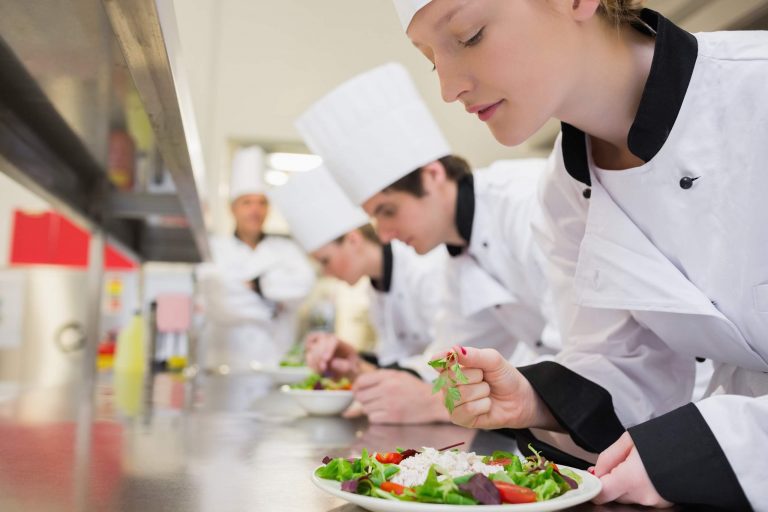
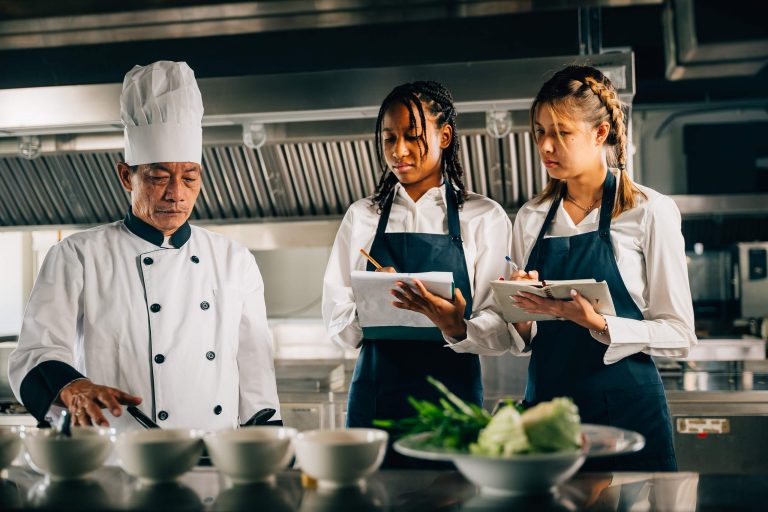
The Back of the House (BOH), is the kitchen, chefs, cooks, kitchen porters, that is all that food preparation area. Unlike the front of house, a kitchen has very high time pressure. Each dish must be prepared, cooked and served to be accurate, consistent and fast. They do the following things in the kitchen: make sure the recipes they follow and cook are accurate, keep the quality up by moving fast, maintain a good workflow where everything is organized, and talk to each other constantly. A well-run kitchen is like a ballet, with each person moving in a choreographed and coordinated manner.
- Communication between the Front and Back is Key
It’s all about the inter-relationship between the FOH and the BOH, which is an essential factor in every restaurant setting. Any communication breakdown or misunderstanding is an opportunity for a delay, for an incorrect dish to be delivered to the table, or even an angered guest. Good communication in the restaurant industry includes: making the orders clear and concise, making sure the orders are confirmed and the requests, and providing feedback when things are particularly busy. Good restaurants have systems and processes that help to reduce any misunderstandings.
- Timing is of the Essence
Timing is just as important as skill in a restaurant situation. Even a dish that has been cooked to perfection does no good if it is served late. It is all about timing, and flow: all dishes are ordered in the order of priority, dishes are timed to all be ready to be served together, and all tables are turned over quickly, and in a controlled fashion. This makes service seamless and efficient for guests.
- Managers keep the whole ship afloat.
A manager is the person who makes everything in a restaurant flow correctly. It is not enough to simply manage staff, but to also manage pressure and stress as well as deal with problems, and keep the entire business running smoothly and efficiently. This involves: making sure staff are working well together, stock control, dealing with incidents while the staff are on duty, and ensuring that the service standards are upheld. In other words, good management is rarely seen by guests, yet it is critical to maintain standards.
- It Is Important to Understand the Restaurant as a System for Beginners.
Many new staff just do their own tasks without appreciating what the bigger picture looks like and so limit their potential. A full understanding of the restaurant business leads to: better decision-making, better communication, and a better approach under pressure. In essence, it is becoming a better, more valuable staff member. System awareness is the difference between entry-level and aspiring to be a pro in the business.
In conclusion: A restaurant is a complex and high-paced system in which every part matters; success in this business is dependent on not only how well an individual performs, but how well all parts of the team work as a whole. In other words, once you understand the restaurant system in its entirety, rather than just a job, it will improve your learning and make you a much more desirable employee.